


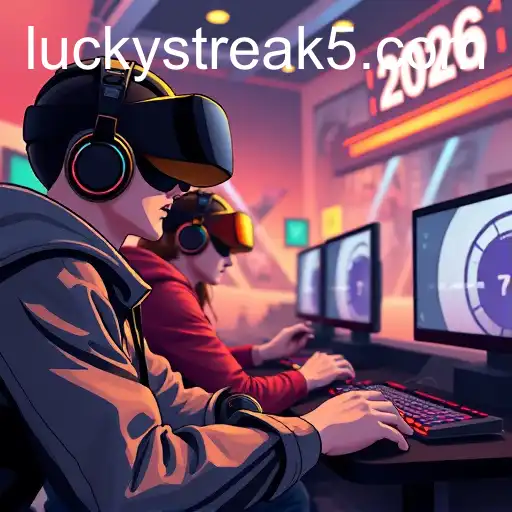
In recent years, the concept of 'lucky streak' has become a pervasive phenomenon in the world of online gaming. As we advance into 2026, this term has not only captivated players but has also sparked discussions about its impact on gaming dynamics, ethics, and virtual economies. The idea behind a 'lucky streak' is simple—a player experiences a series of fortunate events or successes in a game, which can significantly influence their engagement and satisfaction.
Historically, gaming has been closely associated with skill and strategy, but the element of luck introduces an unpredictable variable. With technological advancements, particularly in artificial intelligence and data analytics, game developers can now simulate more complex systems that mimic real-world probabilities. This allows 'lucky streaks' to be integrated into gameplay in a manner that feels organic and exciting, rather than purely algorithm-driven.
The impact of these streaks on player behavior is profound. Some players report increased motivation and excitement when they experience consecutive wins, leading to prolonged gaming sessions. However, this has also raised ethical considerations. Critics argue that the manipulation of luck within games can border on exploitative, especially in pay-to-win models where real money influences the odds.
Moreover, 'lucky streaks' have significant implications for online communities and virtual economies. In-game items or benefits associated with luck-based events can inflate market values, drive trade, and influence player interactions. For instance, rare items acquired during a lucky streak may become highly sought after, thus affecting supply and demand dynamics within the game.
As we move forward in 2026, the gaming industry is continually exploring how to balance these elements of luck with fairness and skill. The integration of augmented and virtual reality technologies is set to revolutionize the gaming experience, providing an immersive environment where 'lucky streaks' feel even more tangible. The ethical considerations will continue to provoke discussions among developers, policymakers, and players alike.
In conclusion, as the interplay between luck and skill continues to evolve, the gaming industry must navigate the challenges and opportunities that come with it. The allure of the 'lucky streak' is undeniable, and its influence on the future of gaming remains a topic of interest and debate.